
Commercial kitchen exhaust cleaning services
What we clean, how the process works, and what you receive at the end.
Comprehensive full system cleaning for commercial kitchens
Cleaned to Australian Standard AS 1851 by Duncan and Daryl — canopy to rooftop, certificate on the day.

Certified team and experts does the job
No subcontractors. You know exactly who's coming.

Cleaned to ASAS 1851 standard
The standard your council and insurer require.

Southeast Queensland only
Brisbane · Gold Coast · Sunshine Coast.
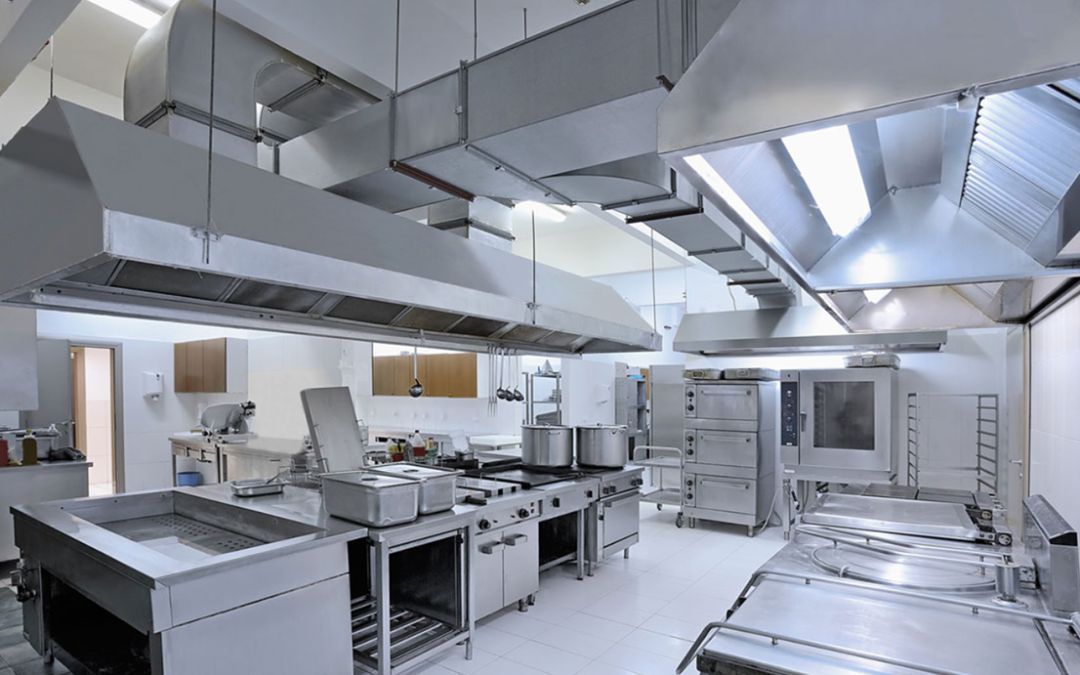
Canopy & Filter Cleaning
The canopy hood is the first point of grease capture in the exhaust system — and where fire risk accumulates fastest.
- Filters removed & surfaced cleaned — every filter, every service
- Baffle Filters removed & surfaced cleaned — in place or removed depending on configuration
- Plenum & internal areas of canopy fully cleaned — not filters only, the full assembly
- Lowers, cutters, splashback & canopy fascia cleaned
- Canopy structure inspected — for damage, corrosion, or missing components
- Findings documented — in the job record
The compliance certificate issued at completion covers the canopy assembly as a documented component of the full system clean.
Ductwork & Riser Cleaning
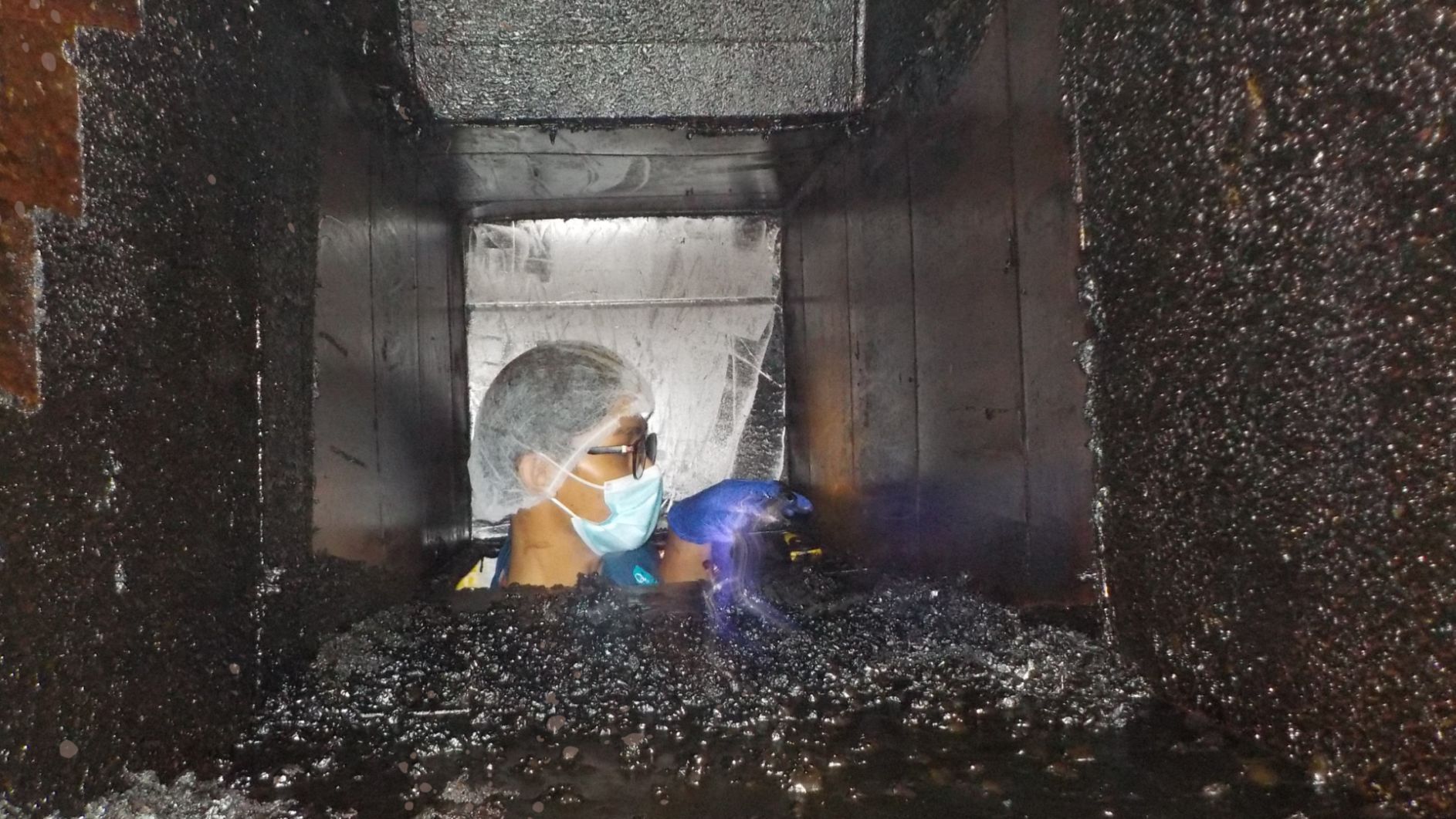
Grease migrates beyond the canopy into vertical risers and horizontal duct runs — the section of the exhaust system most cleaning companies quietly skip.
- Vertical risers cleaned — from canopy to roof, full length, not partial
- Horizontal duct runs cleaned — including elbows and transitions
- Duct crawls performed — on larger systems where access allows
- Duct interior photographed — before and after cleaning as part of the job record
- Access panels installed — where none exist, included in the job scope, not a separate engagement
Access panels are required for full duct cleaning — where they do not exist, we install them. We cut, frame, and seal them first so the full duct run can be cleaned on the same visit.
The Australian Standard requires the full system to be addressed — a duct clean that stops at the canopy does not produce a compliant certificate.
Fan & Extraction Unit Maintenance
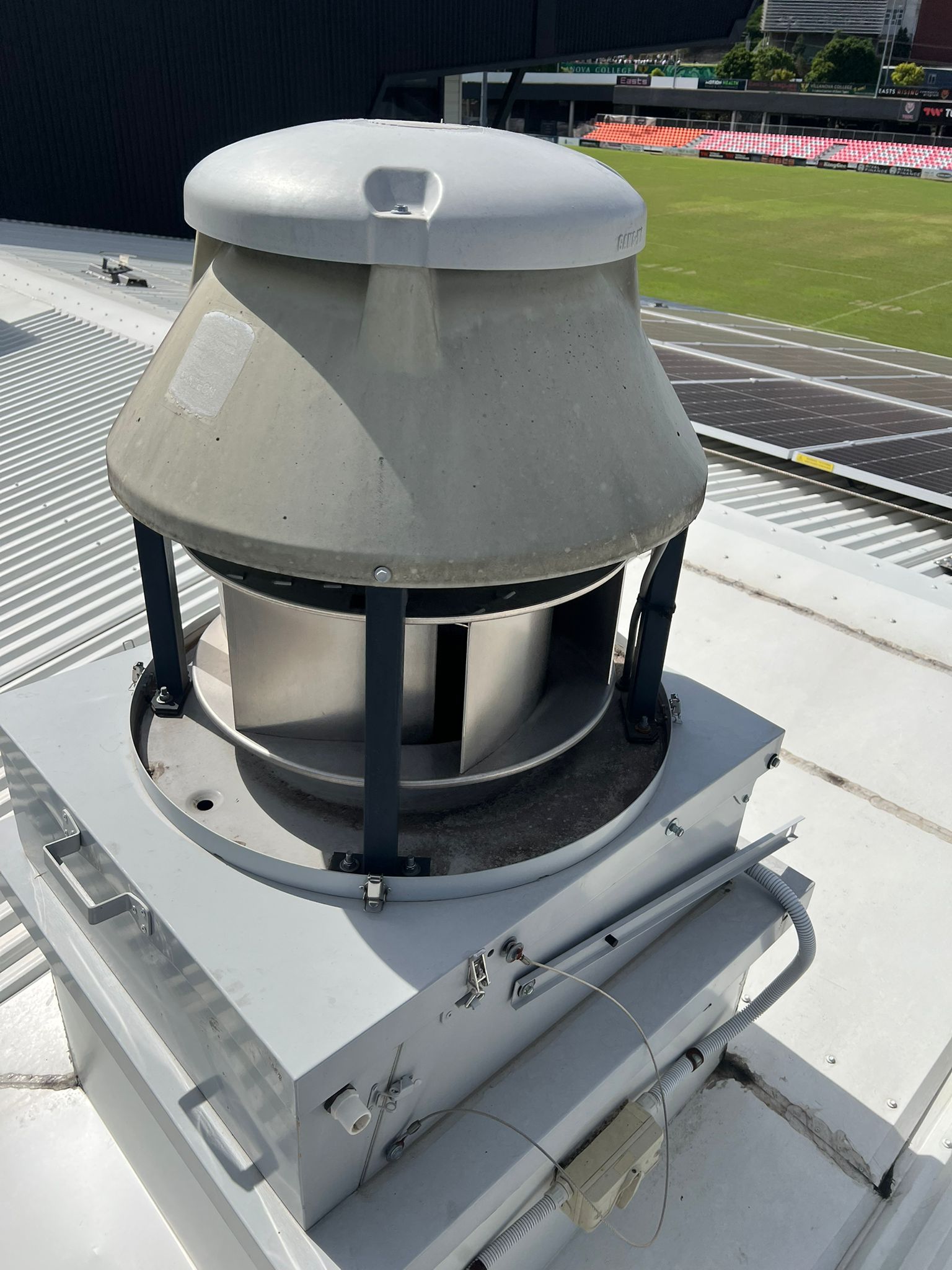
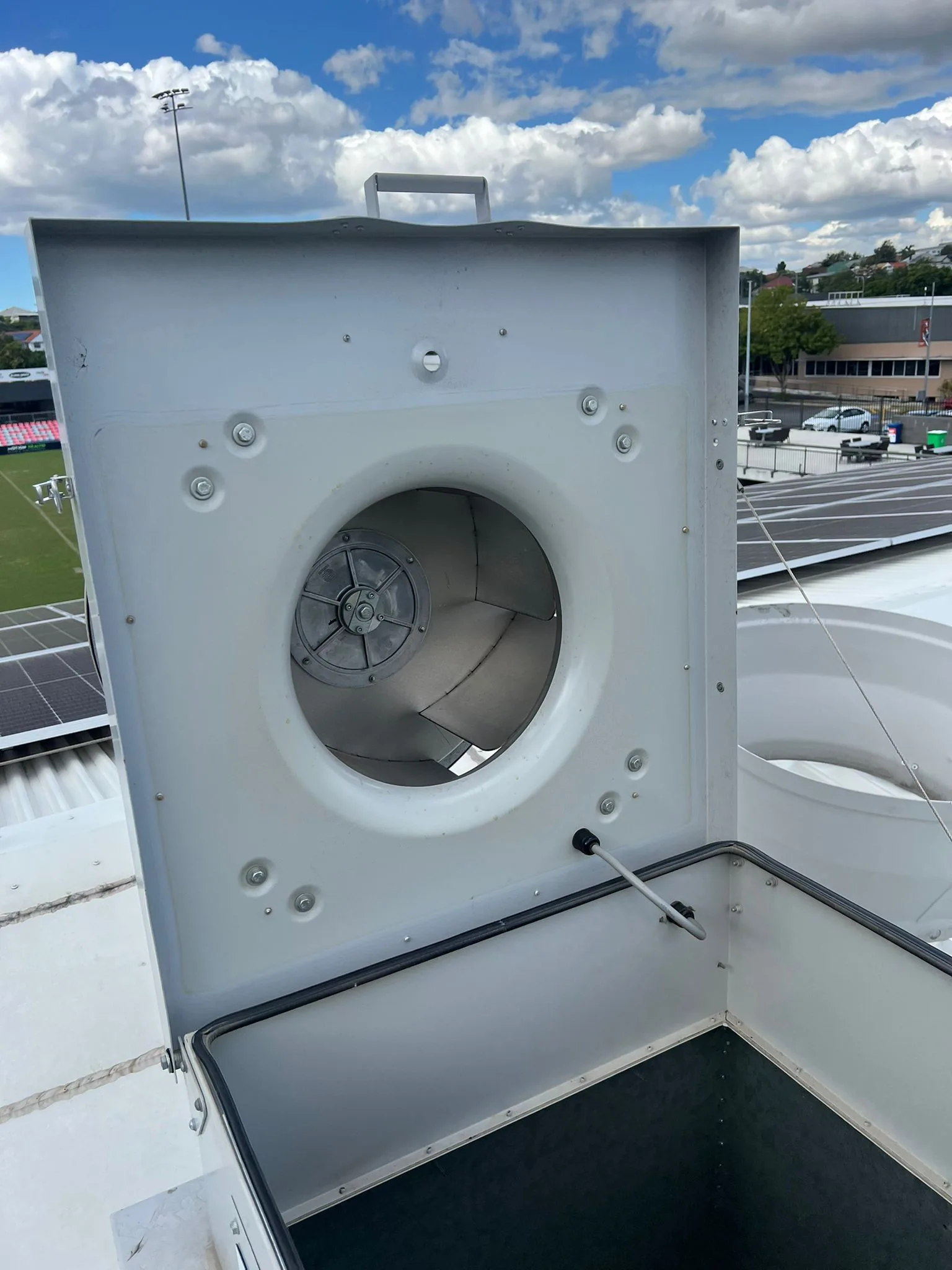
The rooftop extraction fan is the end point of the exhaust system — and the component most venues have never had independently inspected.
- Fan blades, housing, and surrounding curb cleaned — grease buildup removed
- Motor, bearings, and belt drive inspected — for wear or damage
- Unit confirmed running correctly — before we leave the roof
- Findings documented — in the job record, mechanical faults noted but not repaired
Airflow through the full system — canopy to roof — is what the compliance standard measures. A clean canopy connected to a degraded fan does not produce a compliant result.
Access Panel Installation
Overview
Access panel installation in ductwork for kitchen exhaust systems is essential for maintaining hygiene, safety, and compliance. These panels provide convenient entry points for inspection and cleaning, helping prevent grease buildup and reducing fire risk in commercial kitchens.
Compliance & Standards
Properly installed access panels ensure adherence to relevant building codes and fire safety regulations. Placement, sizing, and spacing must align with local standards to allow thorough cleaning of the entire exhaust system.
Installation Considerations
Panels should be strategically positioned at key points such as bends, junctions, and long duct runs. High-quality, grease-tight, and fire-rated materials are critical to maintain system integrity and performance.
Maintenance Benefits
Well-installed access panels make routine servicing faster and more effective, extending the lifespan of the exhaust system while minimizing operational disruptions and costly repairs.
We make use of Bullock, a high-quality access panel solution specifically designed for the air conditioning industry.
The Compliance Certificate
What it covers, how it is issued, and why your council and insurer require it.
When EGS completes a job, we issue a compliance certificate confirming that your kitchen exhaust system — canopy, ductwork, and extraction unit — has been cleaned to Australian Standard AS 1851. This is the standard that governs commercial kitchen exhaust cleaning in Australia. It specifies what must be cleaned, to what condition, and how the work must be documented.
The certificate is the document your local council requires to demonstrate that your venue is meeting its food business licence obligations. Most councils in southeast Queensland require exhaust cleaning at a frequency determined by the type and volume of cooking at your venue. The certificate is your evidence that the obligation has been met at the required standard.
Your insurer requires the same evidence. Commercial kitchen insurance policies typically include a condition requiring regular compliant exhaust cleaning — a venue that cannot produce a valid certificate may find their policy voided in the event of a fire. The certificate EGS issues is dated, scoped to your specific system, and names the standard the work was completed to.
We issue the certificate on the day of completion — it is not sent later and it covers the full system cleaned on that visit.
How often does my exhaust system need to be cleaned?
The frequency depends on the type and volume of cooking at your venue. High-volume kitchens — deep fryers, woks, chargrills — typically require cleaning every three months. Medium-volume operations such as cafes are usually every six months. Lower-volume operations such as aged care facilities may be compliant with an annual clean. Your insurer or council may specify a minimum frequency in your policy or licence conditions — check those first. When we inspect your system, we will tell you what frequency we recommend based on what we find.
What does the free site inspection involve?
We attend your venue and assess the full exhaust system — canopy configuration, duct run length and routing, rooftop extraction unit, and access panel situation. We photograph the system and note anything that affects the scope or cost of the clean. The inspection takes between 30 and 60 minutes depending on system complexity. There is no charge and no obligation to proceed. The quote we send afterwards is based on what we actually saw — not an estimate from a phone description
Will you work around our trading hours?
Yes. We schedule all jobs outside your service periods — early morning before breakfast service, late evening after kitchen close, or during a full closure day. When we scope the job, we confirm the access window with you and build the schedule around it.
What if I only need part of the system cleaned — can you do the canopy only?
We can clean the canopy only if that is what your scope requires. However, a canopy-only clean does not produce a full-system compliance certificate — the certificate will specify what was cleaned and what was not. If your council or insurer requires evidence of a full system clean, a partial clean will not satisfy that requirement. We will tell you clearly what the certificate will and will not cover before you confirm the job.
Do I need access panels before you can clean my ductwork?
Not necessarily before you book — but access panels must exist before a compliant duct clean can be completed. When we inspect your system, we assess whether adequate access exists. If it does not, we include panel installation in the job scope and cost it in the quote. The panels are installed at the start of the job, then the duct is cleaned through them on the same visit.
What happens if my system is in poor condition — will you still issue a certificate?
We issue a certificate for the work completed. If the system has damage, corrosion, or mechanical faults we cannot address through cleaning alone, we document those findings in the job record and note them in the certificate. In cases where the system condition means a compliant clean cannot be achieved, we will tell you that clearly rather than issue a certificate that overstates what was done.
How long does the job take?
A standard commercial kitchen — single canopy, straight duct run, accessible rooftop fan — takes approximately two and a half to three hours. Larger or more complex systems take four to six hours. We give you a time estimate when we scope the job so you can plan your access window.